
探讨《芳香心理学》系列沙龙 · 成员招募

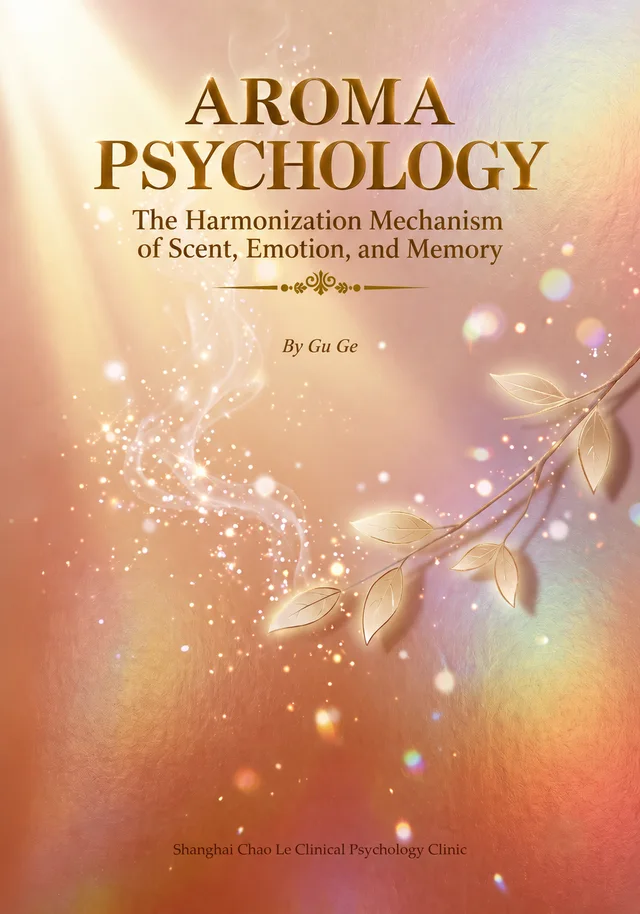
招募:《芳香心理学》系列沙龙成员
心灵花园®“芳香心理学”系列沙龙开始招募成员。我们将围绕作者顾歌的《芳香心理学:气味、情绪与记忆的谐调机制》,一起读、一起闻、一起聊:气味如何越过语言抵达情绪与记忆,APIM 三层机制、APP 芳香人格图谱、APT 五步法在生活与工作里可以怎样用。
欢迎加入:心理咨询师与治疗师、芳疗师、医护与照护者,以及任何一个"心里明白、身体不听"的普通读者。
如何报名:在本帖下方回复“报名”,再用一两句话说说你为什么想来。请不要在回复里留电话、微信等联系方式。每一期沙龙的时间、地点与形式确定后,会在本帖和“心理沙龙与成长”频道公布。
有疑问可致电心灵花园®:021-51699291。
有些事,道理早就懂了,身体却一直不肯放。
Some things the mind settled years ago. The body never agreed.
图书介绍
一棵开满花的桂花树下,一个人正在一枝一枝地把它剪掉。
那是 2003 年之后无数个下午中的一个。顾歌从二楼咨询室的窗口看下去,看见老李仰着头,手里一把旧园艺剪,神情里没有一丝欣赏——眉压得很低,嘴角向下,肩膀锁死,像在和什么看不见的东西较劲。
香气是暖的、密的,几乎可以摸到。而他在剪。
那一幕成了这本书的起点。
一个二十年没解决的临床困境
在诊室里,顾歌反复遇到同一种人:他们读过书,做过咨询,能把自己的童年、关系模式、防御机制分析得比治疗师还清楚。然后他们回家,继续失眠,继续在某个瞬间毫无道理地流泪。
认知可以被说服,身体不会。
这不是来访者不努力,也不是方法不够好。这是因为,主流心理治疗几乎全部建立在"语言—认知—理解"这条通路上,而创伤和情绪记忆真正存放的地方,从来不在那条路上。
气味为什么不一样
人类的五感中,只有嗅觉不经过丘脑中转。它从鼻腔的嗅上皮出发,经嗅球、嗅束,直接抵达杏仁核与海马,情绪与记忆的核心。
这意味着:气味不需要被理解,就已经起作用了。
它不敲门,它直接进屋。
这也是为什么一缕雪松可以让一个在创伤叙事中解离的来访者重新锚回此时此地;为什么一个人闻到茉莉会说"我不知道为什么,它总让我想到雨",而她从来没有把茉莉和雨联系起来过。
从现象到系统:APIM / APP / APT
《芳香心理学》真正的价值,不在于指出气味有用,而在于把"有用"变成可教、可复核、有边界的方法。
- APIM(芳香心理整合机制):解释气味如何在三个层面同时发生作用:身体层(生理唤起与自主神经调节)、心理层(情绪与记忆的激活)、意义层(个人史赋予这个气味的私人含义)。同一支精油对两个人效果相反,答案在这里。
- APP(芳香人格图谱):不是星座式的性格分类,而是一张防御地形图。沿"能量高低"与"僵化—解离"两轴,书中描绘出四种典型的防御人格:冰泉型、木心型、火心型、花心型。它回答的不是"你是谁",而是"当你受不了的时候,你会往哪边躲"。
- APT(芳香心理疗法五步法):从初始评估、气味选择、锚定建立、叙事工作到结束与边界,每一步都有操作定义、禁忌和退出机制。书中明确写出:在 EMDR 中,气味只作为安全锚,不替代双侧刺激;在 TF-CBT 中,气味只用于调节情绪强度,不改变叙事核心结构。
APT 是放大器,不是主角。
这本书里真正的主角都在我们身边
老李和那棵桂花树。闻到茉莉却叫不出名字的艾玛。在他人需要和自己之间找不到缝隙的护士陈。数据正常、身体却先知道真相的老王。还有那座"白塔",一间极其专业、极其高效、极其数字化的医院,和香气飘进去之后发生的事。
每一个案例都附有临床脚注、风险提示和边界说明。该说"这里很危险"的地方,书里一句没省。
写给谁
写给心理咨询师与治疗师,在语言用尽的地方,还有一条感官通路可以走。
写给芳疗师,这是一套把你的工作放进心理学坐标系的框架,也是一份清楚的能力边界说明。
写给医护与照护者,写给那些每天在极其标准的系统里,努力照顾具体的人的人。
也写给任何一个"心里明白、身体不听"的普通读者。
最后
顾歌全书不用"治愈"这个词。他用的是谐调。
治愈意味着有东西坏了需要修好。谐调意味着那些彼此冲突的部分,可以学会在同一个人身上共处。
一片森林不需要中心。它只需要足够多的人,在他们各自站着的那块土地上,认真地种下去,照料它,然后等着看它会不会扎根。
About the Book
A tree is in full bloom, and a man is cutting it down one branch at a time.
It is an October afternoon in Shanghai. From a second-floor consulting room, clinical psychotherapist Gu Ge looks down and sees Old Li standing beneath the osmanthus, head tilted back, an old pair of garden shears in his hand. The fragrance is warm and dense, thick enough to feel. There is nothing in his face that looks like admiration. His brow is low, his shoulders locked, as though he were wrestling something invisible.
That afternoon is where this book begins.
A clinical problem twenty years in the making
Gu Ge keeps meeting the same person in his consulting room. They have read the books. They have done the work. They can describe their own childhood, their relational patterns, their defenses with more precision than their therapist can.
And then they go home and lie awake all night.
Cognition can be persuaded. The body cannot. Nearly all mainstream psychotherapy runs along a single road — language, cognition, understanding — and the place where emotional and traumatic memory is actually kept was never on that road.
Why scent is different
Of the five senses, only smell bypasses the thalamus. It travels from the olfactory epithelium through the bulb and tract and arrives directly at the amygdala and hippocampus — the seat of emotion and memory.
Which means a scent does not need to be understood in order to work.
It does not knock. It walks in.
This is why a trace of cedar can anchor a dissociating client back into the present moment in the middle of trauma processing. It is why a woman can smell jasmine and say, I don't know why, it always makes me think of rain — having never once put jasmine and rain together before.
From observation to system: APIM, APP, APT
The value of this book is not the claim that scent matters. It is the work of turning that claim into something teachable, auditable, and bounded.
- APIM — the Aroma Psychology Integration Mechanism. Scent acts on three layers at once: the Bodily Layer (physiological arousal and autonomic regulation), the Psychological Layer (activation of emotion and memory), and the Meaning Layer (the private significance a person's own history has attached to that smell). Why one oil calms one client and agitates another is answered here.
- APP — the Aroma Personality Profile. Not a horoscope of scent preferences, but a map of defensive terrain. Along two axes — energy level, and rigidity versus dissociation — the book describes four defensive personalities: Ice-Spring, Wood-Heart, Fire-Heart, and Flower-Heart. The question it answers is not who are you, but when it becomes unbearable, which way do you go.
- APT — Aromatherapy Psychology Therapy, in five steps. Initial assessment, scent selection, anchoring, narrative work, closure and boundaries — each with operational definitions, contraindications, and an exit protocol. The book is explicit: in EMDR, scent serves only as a safety anchor and never replaces bilateral stimulation; in TF-CBT, it is used only to modulate emotional intensity, never to alter the structure of the narrative.
APT is an amplifier, not the lead.
The people in this book
Old Li and the osmanthus tree. Emma, who smelled jasmine and could not say whose it was. Nurse Chen, who could find no gap between everyone else's needs and her own. Old Wang, whose body knew the truth before the data did. And the "White Tower" — a hospital so professional, so efficient, so thoroughly digitized that nothing soft could get in, and what happened once a scent did.
Every case carries a clinical footnote, a risk flag, and a statement of limits. Where the book needs to say this is dangerous, it says so.
Who this book is for
For counselors and psychotherapists: when language runs out, there is still a sensory road.
For aromatherapists: a framework that places your work inside a psychological coordinate system — and a clear account of where your competence ends.
For clinicians, nurses, and caregivers: for everyone trying to care for a specific human being inside an extremely standardized system.
And for any reader who has ever thought: I understand it perfectly, and it hasn't helped at all.
A note on one word
Gu Ge never uses the word cure. He uses harmonization.
A cure implies something is broken and must be fixed. Harmonization implies that the parts of a person that are at war with each other can learn to live in the same body.
A forest needs no center. It needs only enough people, each standing on their own patch of ground, willing to plant something seriously, tend it, and wait to see whether it takes root.
